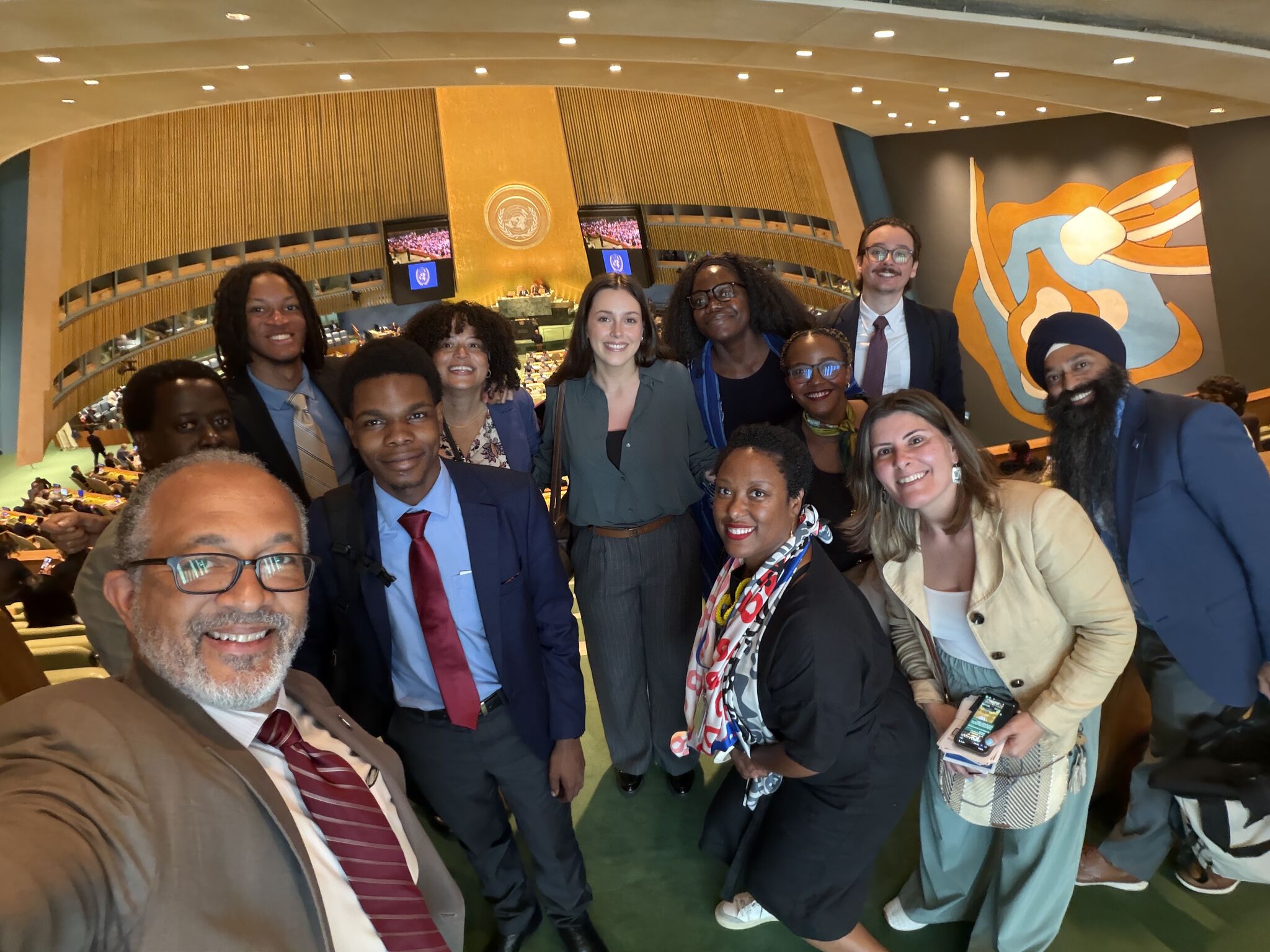
Yesterday, ICAAD joined a landmark side event at the 19th Conference of States Parties to the UN Convention on the Rights of Persons with Disabilities (COSP 19), coinciding with the 20th anniversary of the CRPD. The event, "Accelerating Community Monitoring of Global Disability Rights and Civic Engagement: AI-Enabled Data Dashboards and Mobile Apps," was convened by Dr. Derrick Cogburn's Institute on Disability and Public Policy at American University, with ICAAD as a co-sponsor.
Ecuadorian Ambassador Luis Gallegos, Chair of IDPP's Joint Advisory Board, President of the World Institute on Disability opened the session alongside Kat, a youth delegate from the Canadian Delegation, grounding the day in what two decades of the CRPD have built and what still needs to be done.
Dr. Cogburn's keynote formally launched the CRPD Disability Rights Data Dashboard and relaunched the freely available CRPD iOS mobile app, demonstrating how NLP and generative AI can move treaty analysis from expert-mediated reports to community-accessible evidence infrastructure; enabling Organizations of Persons with Disabilities to track CRPD implementation across 170 Member States in near real-time.
The panel that followed showcased what this looks like across contexts. Professor Keiko Shikako (McGill University) presented the Jooay app, which uses AI-driven crowd-sourced recreation data to address inequities in community programs for children with disabilities. Jason DaSilva, filmmaker and founder of AXS Lab, demonstrated AXS Map which is an AI-enabled platform providing accessibility reviews and ratings of public spaces. Professor Sophie Mitra (Fordham University) presented the Disability Data Initiative's socio-economic dashboards, illustrating the economic opportunities and challenges facing persons with disabilities globally, including in the Global South.
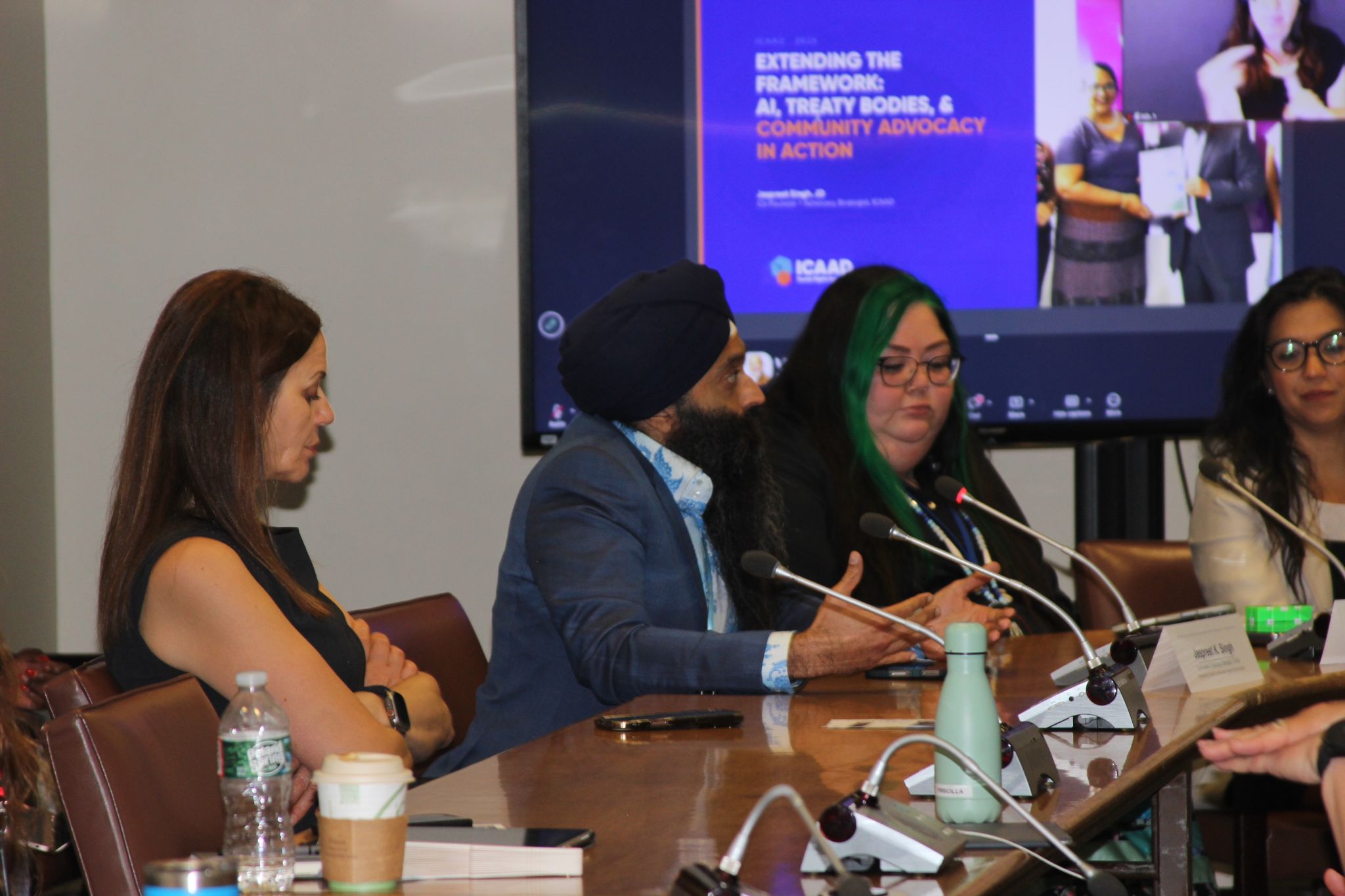
ICAAD's Jaspreet K. Singh closed the panel by extending the framework: presenting ImpartialAI's work using AI to detect judicial bias in GBV cases and drive legislative and judicial reform as a model for how AI-driven tools can empower communities to translate treaty body monitoring into local impact across human rights issues. The session closed with a call to action from Dr. Victor Pineda, Chair of IDPP's International Advisory Board.
Your support is helping us build the capacity of communities to build and use justice tech: turning data into accountability, and accountability into reform.












.png&w=3840&q=75)