I am Dr. Gabisa, serving as the Director of International Civil & Human Rights Advocacy (ICHRA) at UNITED SIKHS. Joining this esteemed organization has been a pivotal decision in my career, enabling me to leverage my legal expertise, experience, and passion in the broader fight for human rights and equality. It is a profound honor to advocate for and defend causes that are crucial for the betterment and dignity of the Sikhs and other minority communities, recognizing the sacrifices many have made in the pursuit of justice and equality.

As 2023 draws to a close, we look back on the work done under our International Civil & Human Rights Advocacy (ICHRA) pillar with both a feeling of accomplishment and a sense of hope that much, indeed, needs to be done toward the cause of Sikh rights and those of other ethnic, racial, and religious minorities.
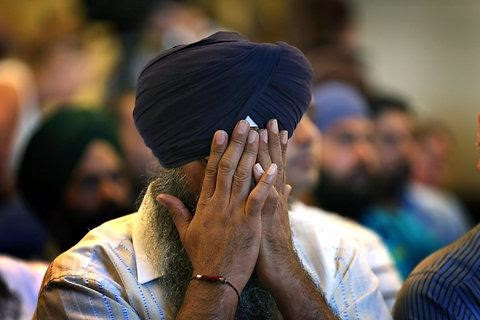
Sikh & minority rights matter!
Here, we'd like to shed light on some of the most pertinent achievements made possible almost entirely by virtue of YOUR commitment toward human & civil rights.
When we Fought & Won against the NYPD
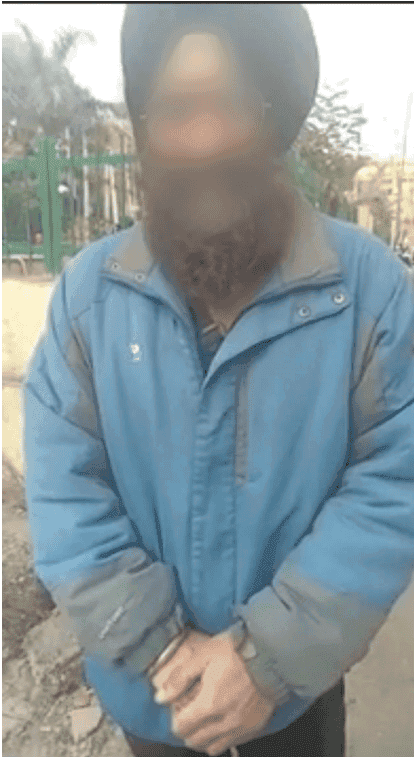
Giani Harmel Singh, granthi and head preacher at New York’s Gurudwara Bhagati Ghar was framed-up in an incident which involved a violent unprovoked attack on him by a trespasser at the Gurudwara. Inexplicably, not only did the NYPD fail to arrest the culprit, they went on to detain the senior preacher, harassing, starving, and shackling him.
What did we do?
The UNITED SIKHS’ legal team took up the case of Giani Harmel Singh, bringing all facts to the fore. In September, the Queens Criminal Court, New York, dismissed all charges filed by the NYPD against him. Additionally, we have filed a Notice of Claim (a prerequisite to instituting a lawsuit) against the NYPD for its ill-treatment of the respected preacher.
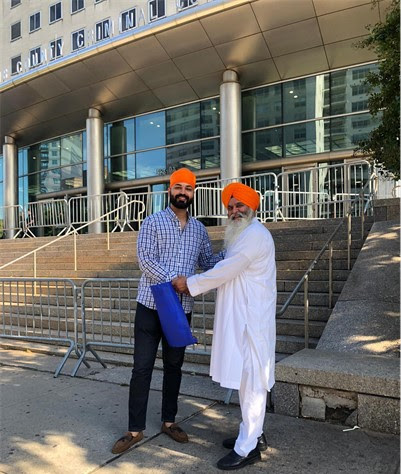
Another Victory for Sikh Rights!
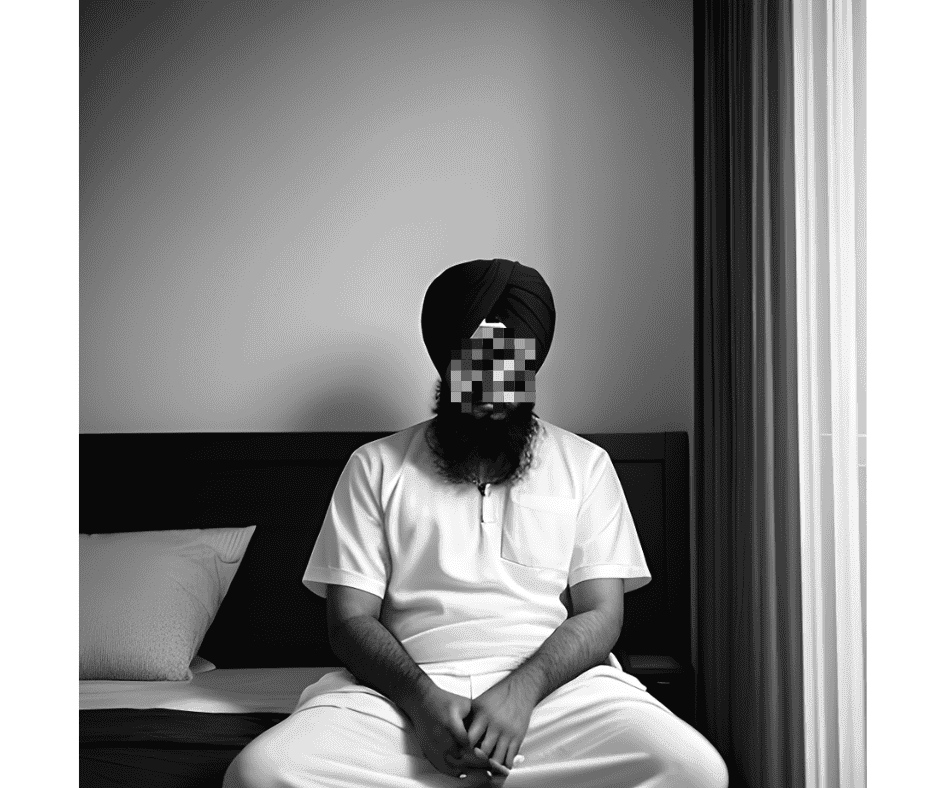
Young Sikh Deputy Sheriff Jasbir Singh* (name changed) successfully underwent training at the Police Academy in California. However, he was subsequently terminated on account of the grooming policy which disallowed the wearing of his beard and turban. Jasbir Singh reached out to us for help.
What did we do?
We promptly launched policy reform advocacy at the Sheriff's Department, California. Soon afterwards, the authorities decided to change the grooming policy and even invited the UNITED SIKHS ICHRA team to provide relevant inputs to help update the existing policy (the kirpan has also been accommodated!)
Proactively Curbing Hate Crimes
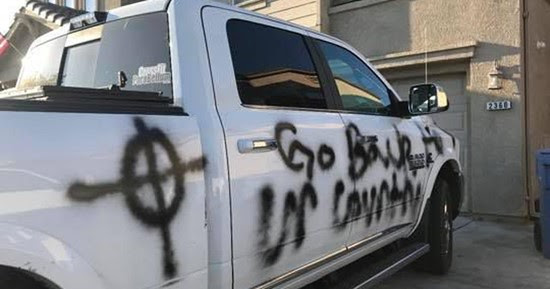
Hate crimes against Sikhs – often a case of mistaken identity – have seen a sharp rise in the backdrop of the Middle-East Conflict
In New York City, a driver was indicted with hate crime charge in the death of 66 year-old Jasmer Singh whom he pummeled in the head and called a "turban man". The hate crime charge came after a series of advocacy works by the ICHRA team. Earlier in the month of October, a Sikh teenager wearing a turban and face mask was assaulted on an NYC bus. The attacker allegedly kept punching the boy, tried to forcibly remove his turban, and screamed "We don’t wear that in this country!"
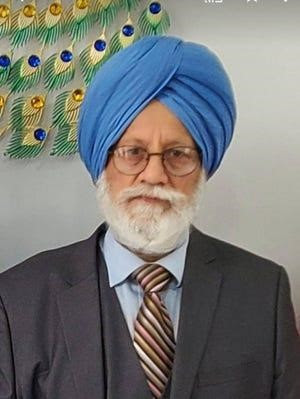
66 year-old Jasmer Singh and his wife, Jaswinder Kaur had planned to visit their hometown, Hoshiarpur, Panjab, just days later.
What are we doing?
We met NYC Mayor Eric Adams to discuss security measures for safeguarding Sikhs.
We are also making sure every hate crime incident is investigated as a hate crime. In the Jasmer Singh case, we advocated with the Queens District Attorney Office & NYPD Office, presenting the necessary facts as well as the relevant cultural and religious context to help officials attribute the killer’s mens rea (motive) to hate. The NYPD did not initially investigate the case as a hate crime but afterwards charged the NYC driver with 20 counts taking “new information” into account.
Why Reporting Every Hate Crime as a Hate Crime Counts
A hate crime – any criminal incident motivated by racial, religious, or ethnic bias – is a federal offense. Every such crime gets recorded in the Federal Bureau of Investigation (FBI) Hate Crimes Statistics. This could potentially attract the attention of legislators in the U.S. Congress, ensuring greater stringency of hate crime laws. Additionally, the penalty for hate crimes in the U.S. justice system is typically more severe and enhanced, thereby deterring such acts in the future.
In addition, we have ramped up our Community Empowerment & Education (CEED) efforts across the U.S., providing self-defense training and access to legal resources – via our confidential 24*7 Umeed helpline – to help community members deal more effectively with potential attacks motivated by bias and hate.
You are Not Alone!
If you or someone you know feels threatened, or has faced any form of attack, please call 911 immediately. You may also reach out to us through our helpline number: 1 855-878-6333. Your rights, safety, and dignity are of utmost importance and must be protected at all costs!
Shaping a New Generation of Lawyers, Activists, & Policy-Makers
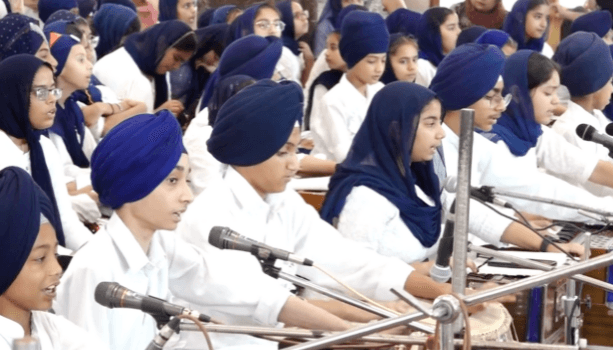
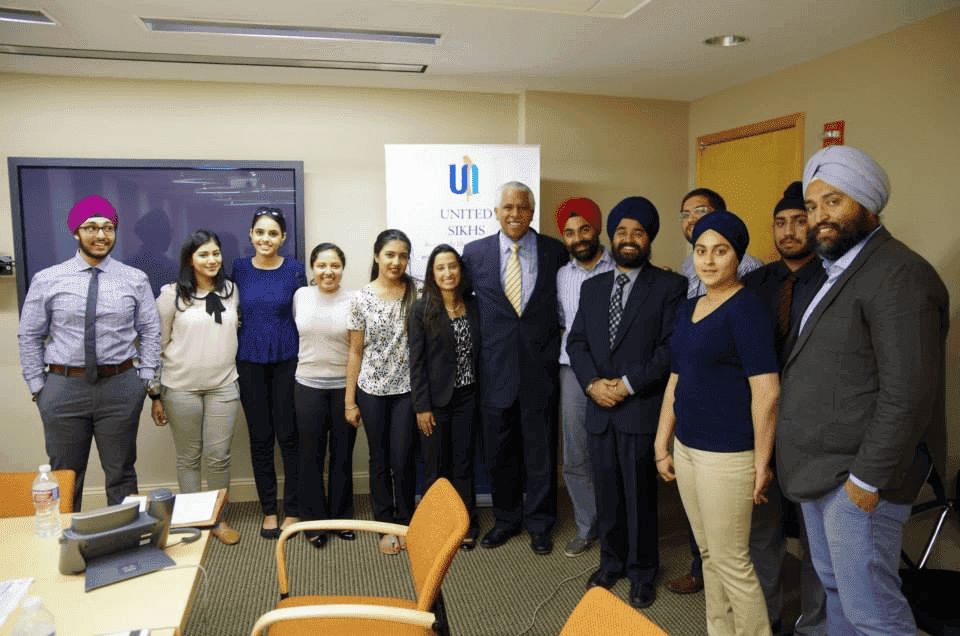
While working to uphold civil & human rights at the moment is essential, it is just as important to help mobilize young people to stand up for these rights tomorrow. Our Annual Humanitarian Aid and Advocacy Academy (AHAA) and Sikh Summit is aimed exactly at that.
This annually-held training program imparts the right skills, resources, and knowledge to participants for pursuing careers in policy, law, civil rights advocacy, healthcare, social justice, and international humanitarian aid work in disaster and conflict zones.
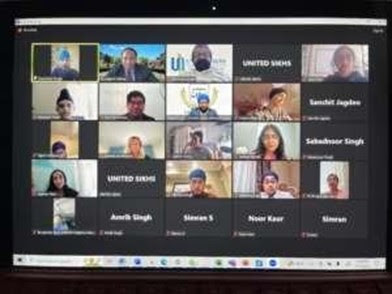
Involving lectures, interactive workshops, and networking events, the event is designed to forge partnerships and foster a meaningful exchange of ideas.
Held from 10-14 July this year, the attendees gained valuable insights into subjects such as hate crimes, free speech, interfaith and inter-communal alliances, workplace harassment, transnational aggression against minorities, and Sikh religious liberty & articles of faith.
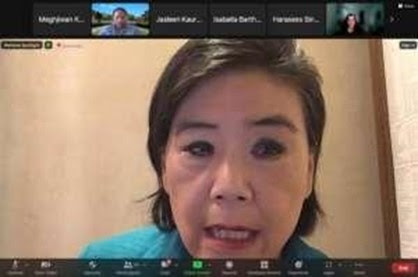
AHAA 2023 saw experts such as Congresswoman Judy May Chu, United States Attorney Ms. Dena J. King; U.S. Ambassador-at-Large for International Religious Freedom Rashad Hussain, and Director of the Equal Employment Opportunity Commission (EEOC) Mindy E. Weinstein speak at length on various issues.
Standing Up Against Transnational Repression
UNITED SIKHS is profoundly disturbed by the growing instances of transnational repression and the threats posed to citizens in the United States and Canada. Recognizing the urgency of this situation, we have engaged in meaningful dialogues with law enforcement agencies and community members. In a collaborative effort with other Sikh NGOs, we have presented a detailed paper to these authorities. Our initiative underscores our unwavering commitment to uphold the safety and rights of those impacted by these cross-border threats, and highlights the pivotal role of non-governmental organizations in fostering global peace and security.
We also saw an unexpected issue arise on Meta platforms: the word "Sikh" was inexplicably banned. This incident sparked concern and confusion within the community. In response, UNITED SIKHS promptly reached out to Meta for clarification. After discussions, Meta acknowledged that the ban was the result of an error in their automated moderation systems, not a deliberate act of censorship. UNITED SIKHS remains committed to vigilantly protect the rights and representation of Sikhs and other ethnic minorities across digital platforms, ensuring such errors do not compromise the community's voice and history.
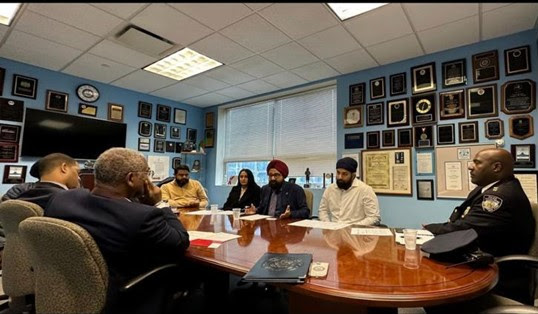
The UNITED SIKHS leadership at a meeting to discuss the surge in hate crimes against Sikhs with Gregory Meeks, Congressional Representative from New York's 5th congressional district.
A Mother’s Victory
Preet Kaur* (name changed*), a Sikh mother, had planned to travel to the United States to donate a kidney to her son, a medical student who was forced to discontinue his studies on account of renal failure. However, her visa was inexplicably revoked.

The iniquitous decision could not have come at a worse time - her son’s condition was rapidly deteriorating, even as his fate hung in the balance.
Our ICHRA team took swift action to advocate her case, opening a channel of communication with the U.S. State Department, including a face-to-face meeting with the Department of Homeland Security. Talks resolved the issue and the mother was subsequently granted a visa to travel to the U.S. to donate her kidney and save her son’s life.
“I am extremely grateful to the whole UNITED SIKHS Team. With my mom getting a visa, I can undergo the kidney transplant and begin studying again and live a normal life” - Preet Kaur’s son.
Opening Doors, Creating Avenues
35-year-old Simranjeet* (name changed*) from India faced abandonment and an uncertain future when her husband decided he wanted a divorce. With no work and no valid visa status, she got in touch with the UNITED SIKHS’ Umeed helpline in desperation and distress. The Umeed manager evaluated the case and subsequently put her in touch with the ICHRA team. Our team collaborated with relevant firms that worked on her case pro bono, helping her gain the proper visa that allowed her to stay on in the United States.

Simranjeet found all doors closed – except one.
Simranjeet was afterwards able to enroll at a college for earning future work rights and building a stable future in the U.S. Her divorce is currently in the final chapter of finalization.
Where do Sikhs Stand?
Under ICHRA directives, a team of 10 researchers is conducting research on the global state of Sikh civil rights across the world. Focused on 15 different countries, mainly the U.S., Canada, U.K., Australia, Punjab, India, Pakistan, Afghanistan, Mexico, Kenya and Ukraine, the report seeks to unearth the challenges Sikhs around the world are currently facing. Relying on both qualitative and quantitative research methodology, the report will be launched toward the end of 2023.
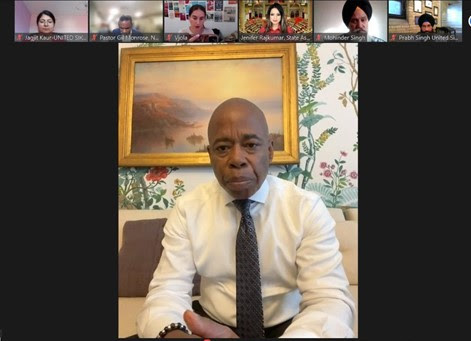
Mayor Eric Adams of New York City at a video conference with the UNITED SIKHS' leadership.
The report, intended to be utilized for further advocacy purposes, will be shared with the United Nations, foreign dignitaries, and respective governments with the aim of influencing international and domestic policy-making toward Sikhs in the homeland and in the diaspora.
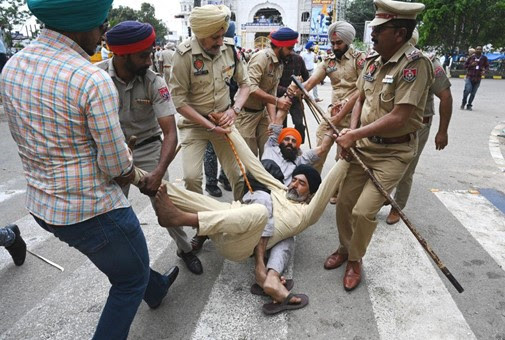
This unprecedented, one-of-a-kind report will provide a bird's-eye view of where Sikhs stand in terms of their human and civil rights in the world today.
You are Not Alone!
If you or someone you know feels threatened, or has faced any form of attack, please call 911 right away. You may also reach out to us through our helpline number: 1 855-878-6333. Your rights, safety, and dignity are of utmost importance and must be protected at all costs!
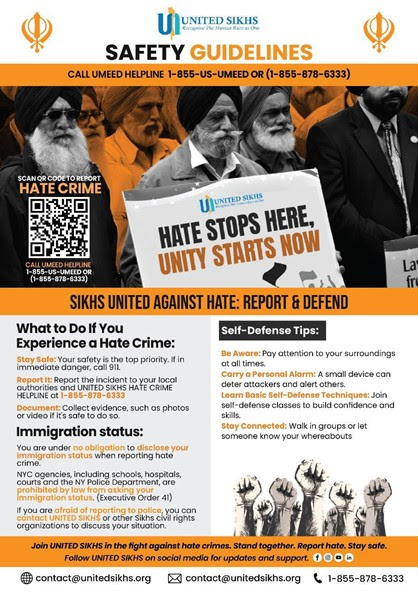
The UNITED SIKHS’ safety guidelines and self-defense tips poster.
In a world defined by growing intolerance, ICHRA is playing an unparalleled role in defending, protecting, and upholding minority civil and human rights. We are deeply indebted to you for extending your support to every cause – big or small – concerning Sikhs and other minorities.
Again, I wish to remind you, it is YOU that is driving positive change and helping spark these developments that signify progress.
Make no mistake – it is your support that enables us to empower the powerless!
Let’s fight – and win – many more battles together in 2024!
Dr. Henok Gabisa
Director, International Civil & Human Rights Advocacy (ICHRA)
UNITED SIKHS
Recognize the Human Race as One
Make a tax-deductible donation today!















_20230722180833338.gif&w=3840&q=75)

_20230712195928975.png&w=3840&q=75)



_20230303223724509.jpg&w=3840&q=75)










_20220316194322538.jpg&w=3840&q=75)


_20210817182356944.jpg&w=3840&q=75)


_20210117195042412.jpg&w=3840&q=75)
_20210117193445999.png&w=3840&q=75)

_20201228234927143.jpg&w=3840&q=75)


_20181112192144766.jpg&w=3840&q=75)